
Why Does My Tooth Hurt When I Drink Cold Water?
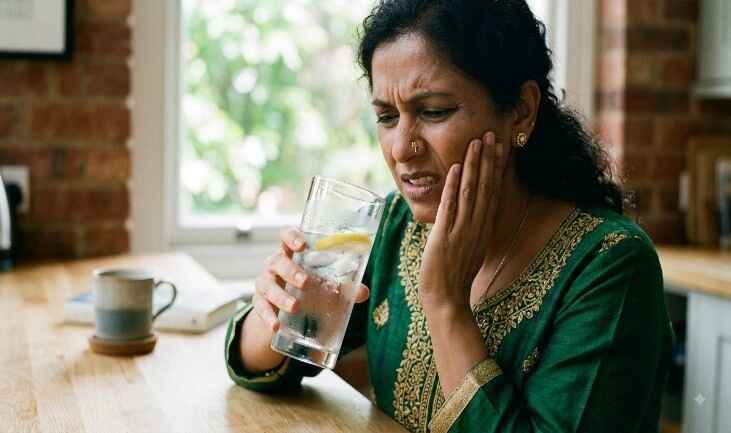
You take a sip of ice-cold water, and suddenly — zing! A sharp, quick pain shoots through your tooth. Sound familiar?
You’re not alone. Tooth sensitivity to cold is one of the most common complaints we hear from patients, and the good news is: it’s usually treatable once we know the cause.
Now let’s break down what’s actually happening in your
mouth.
What’s Really Going On Under the Surface

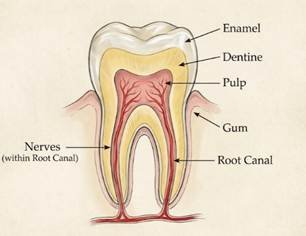
Each tooth is composed of enamel ,dentin and a central pulp cavity containing neurovascular structures.
The ENAMEL is the hardest substance of the body harder than the bone.
Underneath the hard, white enamel is a softer layer called DENTINE and dentine is full of microscopic tubes that lead straight to the nerve inside your tooth.
When your enamel is healthy and intact, it acts like a protective shield, keeping cold, heat, and pressure from reaching those tubes. But when that shield gets worn down or damaged, cold water can travel straight through to the nerve — and that nerve reacts the only way it knows how: with a quick jolt of pain.
Common Reasons Your Enamel Gets Weaker
1.Enamel wear from brushing too hard
Believe it or not, brushing aggressively or using a hard-bristled brush can wear away enamel over time, especially near the gumline.
2. Gum recession
When gums pull back, they expose the tooth root — an area that has no enamel at all, just dentin. This is one of the most common causes of cold sensitivity.
3. Tooth decay or cavities
A cavity creates a direct pathway to the nerve. If sensitivity is paired with pain when you bite down, this could be the culprit.
4. Cracked or chipped teeth
Even a small, invisible crack can let cold temperatures reach the nerve.
5. Recent dental work
Fillings, whitening treatments, or cleanings can cause temporary sensitivity that usually settles within a few days.
6. Grinding your teeth (bruxism)
Grinding, especially at night, wears down enamel faster than normal daily use.
Is This Something to Worry About?
A little sensitivity now and then isn’t usually an emergency — but it is your tooth’s way of telling you something has changed. Ignoring it can allow a small issue, like early decay or a hairline crack, to become a much bigger problem.
SEE US SOONER THAN LATER IF:
- The pain lingers for more than a few seconds after the cold is gone.
- It’s happening more frequently.
- You notice pain when biting or chewing too.
- One specific tooth seems to be the main culprit,
WHAT YOU CAN DO IN THE MEANTIME:
- Switch to a soft-bristled toothbrush and use gentle, circular motions.
- Try a sensitivity toothpaste (look for potassium nitrate or stannous fluoride on the label)
- Avoid rinsing immediately with extremely cold or hot liquids right after eating acidic foods.
- Wear a night guard if you suspect you grind your teeth.
The Bottom Line
Tooth sensitivity to cold water is common, but it’s not something you have to just “live with.” It’s usually a signal — and once we identify exactly what’s causing it, treatment is done. If cold water has been giving your teeth trouble, don’t wait for it to get worse. Book a check-up with us today, and let’s find out exactly what your tooth is trying to tell you.
Written by Dr. Sanjana J Rao, Prosthodontist at Jayanagar Dental Clinic.
Have a question about your teeth? Call us on 080 2663 1474 or book an
appointment online. Caring for families in Jayanagar 4th Block since 1978.
Have questions about tooth sensitivity or want to schedule a visit?
Contact our clinic — we’re happy to help you get back to enjoying your ice water pain-free.